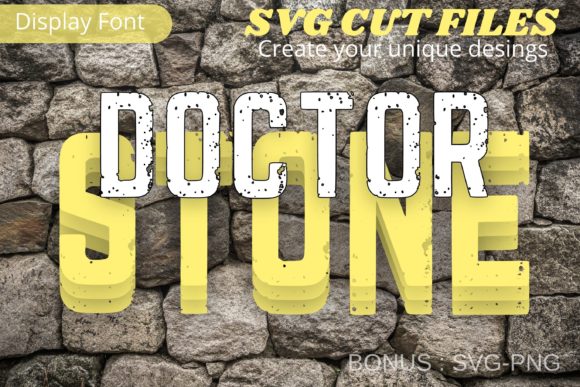
Doctor Stone: A Bold Typographic Statement for Creative Projects
In the world of typography, few fonts manage to balance visual impact with functional versatility as effectively as Doctor Stone. This display font, characterized by its cool, useful, and rough textured aesthetic, has become a go-to choice for designers seeking to make a statement without sacrificing readability. Whether used in logos, branding, or editorial layouts, Doctor Stone brings a unique energy that can elevate any design project.
The rough texture of Doctor Stone gives it a tactile quality, reminiscent of hand-crafted elements or industrial aesthetics. This makes it particularly effective when paired with modern, clean designs, creating a contrast that draws the eye and adds depth. Its bold strokes and slightly irregular edges suggest strength and resilience, qualities that resonate well with brands aiming to project confidence and authority.
One of the most compelling aspects of Doctor Stone is its adaptability. While it is primarily a display font, its structure allows it to be used in a variety of contexts beyond traditional signage or headlines. For instance, it can serve as a strong visual anchor in magazine spreads, where its presence can guide the reader’s attention and add a sense of drama to the layout.
Applications of Doctor Stone in Design Projects
Designers often turn to Doctor Stone when they need a font that can stand out without overwhelming the overall composition. In logo design, for example, this font can convey a sense of authenticity and craftsmanship, making it ideal for businesses in industries like artisanal goods, outdoor equipment, or creative services. Its rough texture can evoke a sense of ruggedness, which aligns well with brands that want to emphasize durability or a hands-on approach.
Beyond logos, Doctor Stone finds a home in branding materials. Business cards, brochures, and packaging can all benefit from its distinctive look. When used in a subtle way—such as in a headline or a tagline—it adds a layer of sophistication without being too aggressive. This makes it a versatile tool for both high-end and more casual brand identities.
For digital applications, Doctor Stone can be used in web headers, social media graphics, or promotional banners. Its bold nature ensures that it remains legible even at smaller sizes, though it is best suited for larger text where its texture can be fully appreciated. When integrated into a website, it can create a memorable visual identity that differentiates the site from competitors.
Why Choose Doctor Stone Over Other Display Fonts?
While there are many display fonts available, Doctor Stone stands out due to its unique combination of texture and clarity. Many similar fonts tend to be either too ornate or too minimal, but Doctor Stone strikes a balance that works across a wide range of design needs. Its rough edges give it character, while its consistent stroke width maintains a level of professionalism that is essential in commercial settings.
Another advantage of Doctor Stone is its ability to work well with other typefaces. It pairs beautifully with sans-serif fonts in modern designs, offering a contrast that enhances readability without clashing. In more traditional layouts, it can complement serif fonts, adding a contemporary twist to classic typography.
Additionally, Doctor Stone is designed with practicality in mind. Unlike some display fonts that are difficult to read in extended passages, Doctor Stone retains a level of legibility that makes it suitable for short-form text. This makes it a valuable asset for designers who want to use it in more than just headlines or titles.
Best Practices for Using Doctor Stone
To get the most out of Doctor Stone, it's important to consider how it will be used within a broader design context. Overusing the font can lead to visual clutter, so it's best to reserve it for key elements such as headings, subheadings, or emphasis points. When used sparingly, it can have a powerful impact without detracting from the overall design.
Color also plays a role in how Doctor Stone is perceived. On dark backgrounds, its texture becomes more pronounced, making it an excellent choice for high-contrast designs. On light backgrounds, it still holds its own, though the rough edges may appear less dramatic. Experimenting with different color combinations can help designers find the right balance for their specific project.
Finally, testing the font in real-world scenarios is crucial. Printing samples or viewing them on various devices can reveal how the texture interacts with different surfaces and resolutions. This helps ensure that the final design meets the intended visual and functional goals.
Doctor Stone in Everyday Design
While Doctor Stone is often associated with professional design projects, it also has a place in everyday creative endeavors. For example, hobbyists and DIY enthusiasts can use it in handmade invitations, greeting cards, or photo albums to add a personal touch. Its rough texture gives these items a handmade feel, making them stand out from mass-produced alternatives.
Planners and organizers can also benefit from using Doctor Stone. Incorporating it into weekly or monthly layouts can add a sense of structure and personality, making the planning process more engaging. Its bold appearance can help highlight important dates or tasks, improving both functionality and aesthetics.
For educators and students, Doctor Stone can be a useful tool in visual learning materials. It can be used in infographics, study guides, or classroom posters to draw attention to key concepts. Its distinct style helps make information more memorable, especially when used in conjunction with other visual elements.