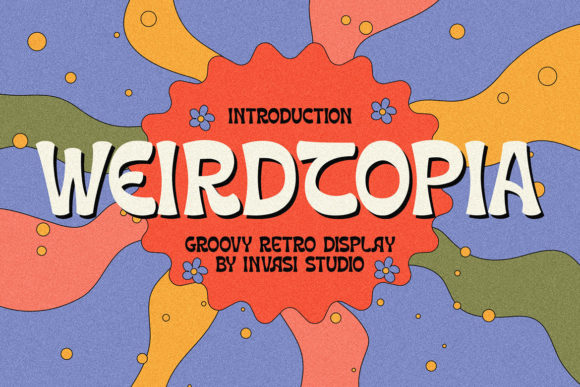
Weirdtopia: A Retro-Inspired Display Font for Stylish Design Projects
Weirdtopia is a unique display font that blends retro aesthetics with modern design sensibilities. Its distinctive style makes it ideal for headers, quotes, and layout elements in various creative projects. The font draws inspiration from 1960s and 1970s typography, offering a nostalgic yet contemporary feel that stands out in visual compositions.
Designed for those who appreciate bold and unconventional typefaces, Weirdtopia features irregular shapes, uneven lines, and a hand-drawn quality that gives it an organic, artistic touch. This makes it particularly well-suited for projects aiming to evoke a vintage or alternative vibe. Whether used in print or digital formats, the font adds a sense of personality and flair that can elevate the overall design.
What Makes Weirdtopia Distinct?
Unlike many standard display fonts that follow strict geometric or serif structures, Weirdtopia breaks away from convention. Its irregularities and asymmetry create a sense of movement and energy, making it perfect for attention-grabbing headlines or artistic text. The font’s character set includes both uppercase and lowercase letters, along with special symbols, allowing for versatile use in different contexts.
The design of Weirdtopia reflects a time when typography was more experimental and less rigidly structured. It captures the essence of 1960s and 1970s graphic design, where creativity often took precedence over uniformity. This makes it a popular choice among designers looking to infuse their work with a retro aesthetic without relying on outdated styles.
Comparing Weirdtopia with Similar Fonts
When considering display fonts, designers often look at options like Bebas Neue, Lobster, or Pacifico. While these fonts are also popular for their bold and stylized appearance, they tend to follow more consistent and predictable forms. Weirdtopia, by contrast, offers a more unpredictable and dynamic look, which can be both a strength and a limitation depending on the project’s needs.
Fonts such as Rockwell or Baskerville provide a more traditional and refined appearance, suitable for formal or classic designs. In comparison, Weirdtopia leans toward a more edgy and unconventional style, which may not be appropriate for all applications. However, this distinctiveness is what sets it apart and makes it a valuable tool for specific creative goals.
For projects that require a high level of readability, fonts like Montserrat or Open Sans might be more practical. Weirdtopia, while visually striking, may not be the best choice for body text or long passages of copy. Its strength lies in its ability to command attention rather than facilitate easy reading.
Best Fit Situations for Weirdtopia
Weirdtopia excels in situations where visual impact is more important than legibility. It works well as a headline or title in magazines, posters, logos, and other design elements that need to stand out. Its retro-inspired style makes it especially effective for projects related to music, art, fashion, or any creative field that values originality and expression.
For example, a music festival poster could benefit from the font’s energetic and unconventional look, helping to convey a sense of excitement and nonconformity. Similarly, a fashion brand targeting a younger, trend-conscious audience might use Weirdtopia to reinforce a bold and innovative image.
In editorial layouts, Weirdtopia can be used to highlight key sections or add a decorative element to the design. When paired with simpler fonts for body text, it can create a balanced and visually engaging composition. However, it should be used sparingly to avoid overwhelming the viewer.
Tradeoffs and Limitations
While Weirdtopia offers a unique visual identity, it is not a one-size-fits-all solution. Its irregular shapes and uneven spacing can make it difficult to read in certain contexts, especially when used in large blocks of text. Designers should consider the intended audience and purpose of the project before deciding to use the font.
Another consideration is the availability of the font. Unlike widely used typefaces, Weirdtopia may not be included in default system fonts, requiring users to download and install it separately. This can be a minor inconvenience for some, but it also ensures that the font remains exclusive and distinctive.
Additionally, the font’s unconventional nature may not align with all design trends or brand identities. For projects that require a more professional or minimalist look, alternative fonts may be more appropriate. However, for those seeking a fresh and unconventional approach, Weirdtopia can be a powerful tool.
When to Choose Weirdtopia Over Other Options
Designers should consider using Weirdtopia when the goal is to create a strong visual statement or evoke a specific mood. It is particularly effective for projects that aim to capture the essence of 1960s and 1970s design, such as album covers, retro-themed advertisements, or vintage-style websites.
If the project requires a font that feels authentic and expressive, Weirdtopia can be a compelling choice. Its hand-crafted appearance adds a layer of uniqueness that can differentiate a design from others. However, if clarity and consistency are more important, a more conventional font may be a better fit.
Ultimately, the decision to use Weirdtopia depends on the designer’s creative vision and the specific requirements of the project. By understanding its strengths and limitations, designers can make informed choices about when and how to incorporate it into their work.
Practical Examples of Use
A band promoting a new album might use Weirdtopia for the title on a promotional poster, giving it a distinctive and eye-catching appearance. The font’s retro feel would complement the music’s style, creating a cohesive visual theme.
An independent magazine focusing on alternative culture could use Weirdtopia for section headings or feature titles, reinforcing its edgy and unconventional identity. When paired with clean, readable fonts for the main content, it can enhance the overall design without compromising usability.
For a website aiming to reflect a 1970s-inspired aesthetic, Weirdtopia could be used in navigation menus or call-to-action buttons. Its bold and stylized look would contribute to the site’s retro atmosphere while maintaining a clear visual hierarchy.
Conclusion: Weighing the Pros and Cons
Weirdtopia is a font that offers a unique blend of retro charm and modern creativity. Its distinctive style makes it a strong choice for projects that benefit from a bold and unconventional look. However, its irregular structure and limited readability mean it is not always the best option for every design.
By evaluating the specific needs of a project and considering the font’s strengths and limitations, designers can determine whether Weirdtopia is the right fit. Whether used as a headline, logo, or decorative element, it has the potential to add character and visual interest to a wide range of creative works.